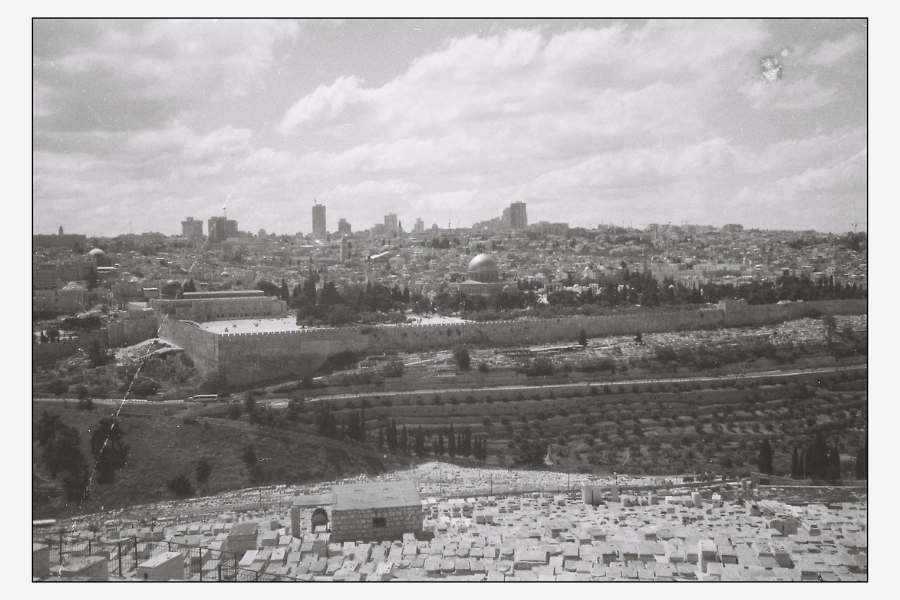
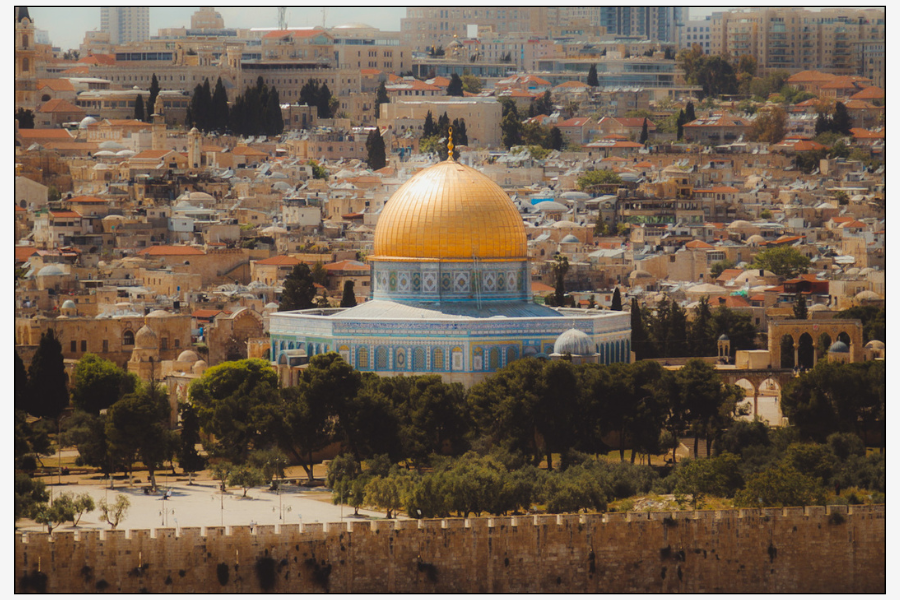
[Old City of Jerusalem seen from the Mount of Olives (analog film AGFA Photo APX 100 BW)]
Pisar em solo israelense proporciona uma experiência única para quem estuda as escrituras sagradas: a possibilidade de ler os textos bíblicos considerando a natureza, arquitetura, geografia, clima e cultura de cada lugar mencionado. Esta jornada pela Terra Santa nos dá novos olhos para as narrativas bíblicas.
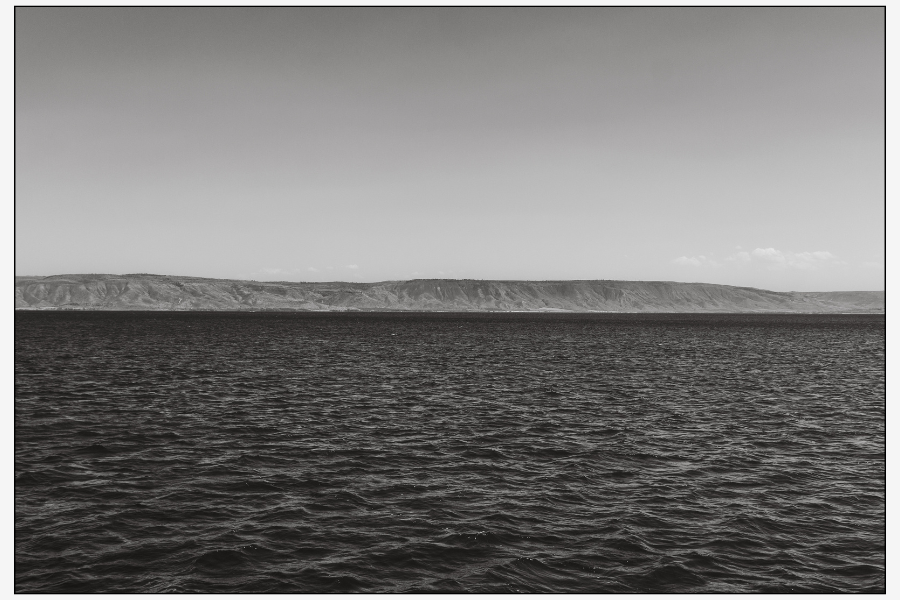
No norte de Israel, o Mar da Galileia – na realidade um grande lago de água doce – apresenta-se como cenário de inúmeras passagens bíblicas. Suas águas hoje permitem observar cardumes de peixes nadando próximos à superfície, contrastando com os relatos de Lucas 5 e João 21, onde pescadores experientes retornavam de suas funções sem sucesso.
Cafarnaum emerge como um dos sítios arqueológicos mais significativos da região. Esta antiga cidade, onde Jesus desenvolveu grande parte de seu ministério segundo os Evangelhos1, localiza-se estrategicamente na Via Mares2, importante rota comercial da época. As escavações arqueológicas revelaram estruturas que corroboram a importância histórica do local como, por exemplo, a casa do discípulo Pedro e as menções a Jesus em suas paredes3.
A 37 quilômetros da Galileia, Cesareia de Filipe marca o extremo norte do país, situando-se nas nascentes do Rio Jordão, aos pés do Monte Hermon. Este local testemunhou importantes diálogos entre Jesus e seus discípulos4. O degelo das neves do Monte Hermon durante a primavera abastece o leito do rio e irriga toda a nação nas estações seguintes – uma metáfora natural que ecoa o princípio de que “quanto mais intenso o inverno, melhor será a primavera“.
Nesta mesma região encontram-se as Colinas de Golã, na tríplice fronteira entre Israel, Síria e Líbano. Durante a Guerra dos Seis Dias de 1967, este território foi palco de confrontos decisivos que alteraram a configuração geopolítica regional5. Magdala, cidade natal de Maria Madalena segundo a tradição cristã, complementa o roteiro do norte, representando nos relatos bíblicos a valorização da mulher na narrativa evangélica.

A expedição nos conduziu também aos territórios palestinos da Cisjordânia, onde se localiza a cidade desértica de Jericó. Segundo os Evangelhos, Jesus passou quarenta dias em jejum e oração nesta região antes de iniciar seu ministério público6. Jericó também figura proeminentemente no Antigo Testamento como a cidade cujas muralhas foram derrubadas ao som de trombetas pelo povo de Israel7, cenário das histórias de Raabe e Rute8.
Jerusalém apresenta-se como ponto de convergência das três principais religiões monoteístas – Judaísmo, Islamismo e Cristianismo – todas originárias da linhagem abraâmica. O Domo da Rocha simboliza esta convergência histórica: o local que hoje abriga a Mesquita de Al-Aqsa representa, segundo a tradição judaica, o monte onde Abraão preparou o sacrifício de Isaque e onde o Rei Salomão edificou o primeiro templo ao Senhor, mil anos antes de Cristo9. Já para os muçulmanos, acredita-se ser o local onde o profeta Maomé ascendeu aos céus10.

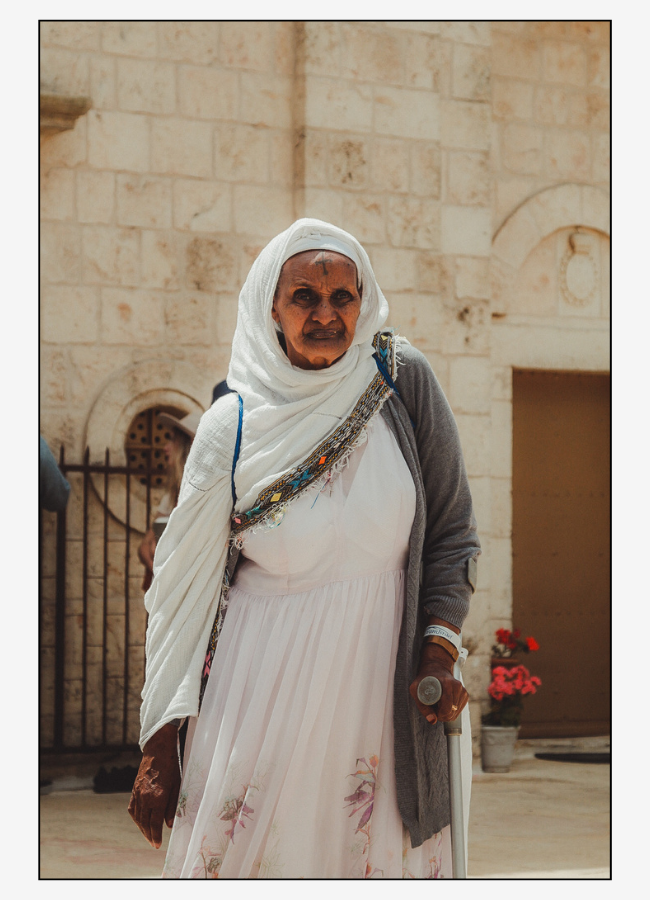
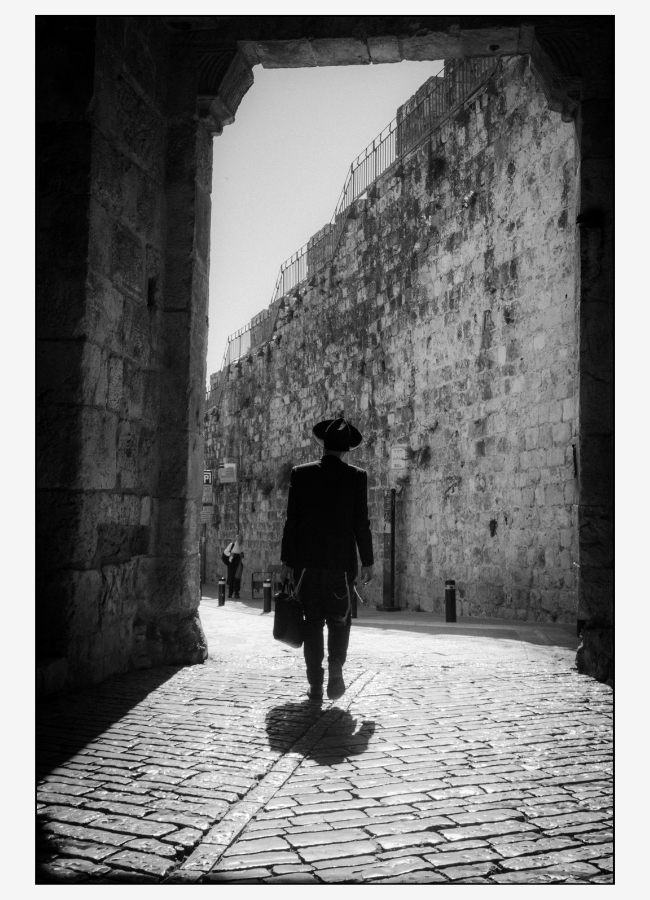
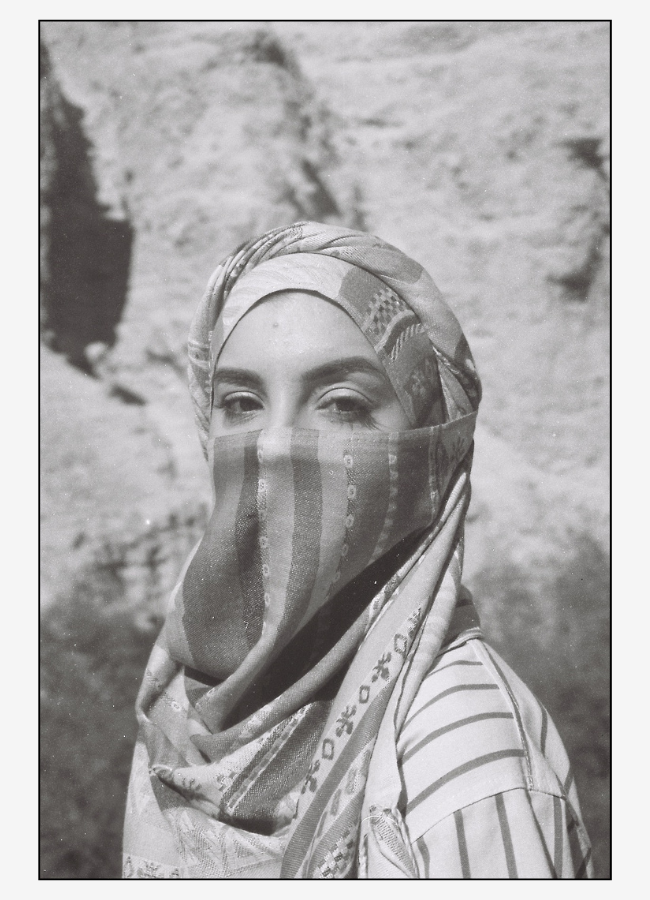

[African Christians from Eritrea on Mount Carmel]
O Domo está dentro da Cidade Antiga de Jerusalém, um complexo com quatro quilômetros de extensão dentro dos muros davídicos e que se divide em quatro bairros: Cristão, Armênio, Judaico – onde se encontra o Muro das Lamentações – e Muçulmano.
Próximo a estes locais situam-se os pontos mais importantes para a humanidade que dividiram o mundo antes e depois de Cristo: o Monte Calvário11, local onde Jesus foi morto e crucificado; o Jardim do Túmulo onde Ele foi sepultado e ressuscitou12; e o Monte das Oliveiras, associado à ascensão e ao Seu prometido retorno13.
Israel moderna emerge de uma história milenar de perseguições e resistência. Jerusalém foi destruída duas vezes, sitiada 23 vezes, atacada 52 vezes, capturada e recapturada 44 vezes por diferentes conquistadores, segundo o historiador Eric Cline, autor de “Jerusalem Besieged“14. O povo judeu enfrentou expulsões, perseguições sistemáticas e o Holocausto durante a Segunda Guerra Mundial, quando aproximadamente seis milhões de judeus foram assassinados pelo regime nazista e seus aliados15.
A persistência das ameaças manifestou-se em eventos como o Massacre de Munique durante os Jogos Olímpicos de 1972, quando o grupo terrorista palestino Setembro Negro assassinou 11 integrantes da equipe olímpica israelense16. Mais recentemente, em 7 de outubro de 2023, o grupo militante islâmico palestino Hamas coordenou e conduziu um ataque terrorista na fronteira sul de Israel. Pelo menos 1.139 israelenses foram mortos, incluindo 1.033 civis, 275 soldados e 58 policiais. O ataque deixou mais de 3.400 feridos, 247 soldados e civis feitos reféns. Em 19 de outubro de 2023, as autoridades israelenses relataram mais de 100 a 200 desaparecidos17. Um massacre de nível de crueldade desumana18, que foi registrado pelos seus integrantes e celebrado pelos seus apoiadores políticos e ideológicos mundo afora.

Israel contemporâneo representa uma síntese complexa entre tradição milenar e modernidade democrática no Oriente Médio. Apesar da história de perseguições e conflitos passados e presentes, mantém-se como uma nação cujo povo demonstra união e alegria – características que transcendem qualquer tentativa de descrição fotográfica ou textual.
Para aqueles que percorrem seus caminhos com a perspectiva da fé, cada pedra, cada monte e cada vale carregam ecos de narrativas que moldaram a civilização ocidental e continuam a inspirar bilhões de pessoas ao redor do mundo.
English version
Setting foot on Israeli soil provides a unique experience for those who study the sacred scriptures: the possibility of reading biblical texts while considering the nature, architecture, geography, climate, and culture of each mentioned place. This journey through the Holy Land gives us new eyes for biblical narratives.
In northern Israel, the Sea of Galilee – actually a large freshwater lake – presents itself as the setting for numerous biblical passages. Its waters today allow us to observe schools of fish swimming near the surface, contrasting with the accounts in Luke 5 and John 21, where experienced fishermen returned from their duties unsuccessful.
Capernaum emerges as one of the most significant archaeological sites in the region. This ancient city, where Jesus developed much of his ministry according to the Gospels, is strategically located on the Via Maris, an important commercial route of the time. Archaeological excavations have revealed structures that corroborate the historical importance of the site, such as the house of the disciple Peter and mentions of Jesus on its walls.
37 kilometers from Galilee, Caesarea Philippi marks the country’s northern extremity, located at the sources of the Jordan River, at the foot of Mount Hermon. This location witnessed important dialogues between Jesus and his disciples. The melting of Mount Hermon’s snow during spring supplies the riverbed and irrigates the entire nation in the following seasons – a natural metaphor that echoes the principle that “the more intense the winter, the better the spring will be.”
In this same region are the Golan Heights, at the triple border between Israel, Syria, and Lebanon. During the Six-Day War of 1967, this territory was the stage for decisive confrontations that altered the regional geopolitical configuration. Magdala, the hometown of Mary Magdalene according to Christian tradition, complements the northern route, representing in biblical accounts the valorization of women in the evangelical narrative.
The expedition also led us to the Palestinian territories of the West Bank, where the desert city of Jericho is located. According to the Gospels, Jesus spent forty days fasting and praying in this region before beginning his public ministry. Jericho also figures prominently in the Old Testament as the city whose walls were brought down by the sound of trumpets by the people of Israel, the setting for the stories of Rahab and Ruth.
Jerusalem presents itself as the convergence point of the three main monotheistic religions – Judaism, Islam, and Christianity – all originating from the Abrahamic lineage. The Dome of the Rock symbolizes this historical convergence: the site that today houses the Al-Aqsa Mosque represents, according to Jewish tradition, the mountain where Abraham prepared the sacrifice of Isaac and where King Solomon built the first temple to the Lord, a thousand years before Christ. For Muslims, it is believed to be the place where the prophet Muhammad ascended to heaven.
The Dome is within the Old City of Jerusalem, a complex spanning four kilometers within the Davidic walls and divided into four quarters: Christian, Armenian, Jewish – where the Western Wall is located – and Muslim.
Near these locations are the most important points for humanity that divided the world before and after Christ: Mount Calvary, the place where Jesus was killed and crucified; the Garden Tomb where He was buried and resurrected; and the Mount of Olives, associated with the ascension and His promised return.
Modern Israel emerges from a millennial history of persecution and resistance. Jerusalem was destroyed twice, besieged 23 times, attacked 52 times, captured and recaptured 44 times by different conquerors, according to historian Eric Cline, author of “Jerusalem Besieged.” The Jewish people faced expulsions, systematic persecution, and the Holocaust during World War II, when approximately six million Jews were murdered by the Nazi regime and its allies.
The persistence of threats manifested in events such as the Munich Massacre during the 1972 Olympics, when the Palestinian terrorist group Black September murdered 11 members of the Israeli Olympic team. More recently, on October 7, 2023, the Palestinian Islamic militant group Hamas coordinated and conducted a terrorist attack on Israel’s southern border. At least 1,139 Israelis were killed, including 1,033 civilians, 275 soldiers, and 58 police officers. The attack left more than 3,400 wounded, 247 soldiers and civilians taken hostage. On October 19, 2023, Israeli authorities reported more than 100 to 200 missing persons. A massacre of inhuman cruelty, which was recorded by its perpetrators and celebrated by their political and ideological supporters worldwide.
Contemporary Israel represents a complex synthesis between millennial tradition and democratic modernity in the Middle East. Despite the history of persecution and past and present conflicts, it remains a nation whose people demonstrate unity and joy – characteristics that transcend any attempt at photographic or textual description.
For those who travel its paths with the perspective of faith, each stone, each mountain, and each valley carry echoes of narratives that shaped Western civilization and continue to inspire billions of people around the world.
- [Livros de Mateus 4, 8, 17; Marcos 1, 2, 9; Lucas 4, 7, 10 e João 2, 4, 6.] ↩︎
- [Via Mares] ↩︎
- [Cafarnaum] ↩︎
- [Livros de Mateus 16: 13-20; Marcos 8: 27-30 e Lucas 9: 18-20.] ↩︎
- [Colinas de Golã] ↩︎
- [Livros de Mateus 4: 1-11; Marcos 1:12-13 e Lucas 4:1-13.] ↩︎
- [Livro de Josué, capítulo 6] ↩︎
- [Livro de Rute (Antigo Testamento)] ↩︎
- [O que é o Monte do Templo?] ↩︎
- [A mesquita de Al-Aqsa segundo o Islã] ↩︎
- [Livros de Mateus 27: 32-56; Lucas 23: 26-43; Marcos 15: 21-32 e João 19: 17-27.] ↩︎
- [Livros de Mateus 28: 1-15; Lucas 24: 1-12; Marcos 15: 42-47; Marcos 16; João 19: 38-42 e João 20: 1-10.] ↩︎
- [Livros de Lucas 24: 50-53 e Zacarias 14: 4-9.] ↩︎
- [Jerusalém, o centro do mundo – Revista Super Interessante] ↩︎
- [O que foi o holocausto? – National Geographic] ↩︎
- [Massacre de Munique] ↩︎
- [Ataque do Hamas a Israel em 2023] ↩︎
- [Imagens do massacre de 7 de Outubro de 2023 – ATENÇÃO: as imagens do site são sensíveis e mostram violência extrema] ↩︎
 MARCUS MELO | Photographer